
2-Week Solo Itinerary to Japan: My Golden Route Through Tokyo, Kyoto & Osaka

This post may contain affiliate links. That means if you click and make a purchase, I may earn a small commission at no extra cost to you. I appreciate your support! ♥️
I still remember sitting in a tiny bar in Golden Gai with an ice-cold beer, chatting to other travellers after a full day of wandering Tokyo alone. Just doing exactly what I felt like that day. That’s when it really hit me. This is why I love travelling solo.
I visited Japan solo for the first time in September 2023, and if you’re wondering whether a 2-week solo itinerary to Japan is enough for your first trip, the answer is yes. Two weeks is the perfect amount of time to follow the Golden Route through Tokyo, Kyoto and Osaka, while still having space to actually enjoy the experience.
That’s exactly what I did on my trip, and while this route covers the highlights, not everything lived up to the hype. Some places were incredible, others felt overcrowded or honestly just not worth it.
In this itinerary, I’ll walk you through a clear day-by-day route, what I genuinely loved, and what I’d rethink if I did this trip again, so you can plan something that feels good, not just looks good on paper.
If you want to plan your trip beyond just this route, I’ve put together all my Japan travel guides in one place, from detailed itineraries to practical tips to help you feel confident before you go.
2-week solo itinerary to Japan overview
This 2 week solo itinerary to Japan follows the classic Golden Route, which is perfect for a first trip. You get a good mix of busy cities, traditional culture, incredible food, and a few easy day trips without constantly packing and moving.
Here’s how I’d structure it:
- Days 1–6: Tokyo
Explore neighbourhoods like Shibuya, Shinjuku, Asakusa, Ginza and more with day trips to places like Mount Fuji, Hakone, and Kamakura. You can also swap one of these for Nikko if you want something more nature-focused. - Days 7–10: Kyoto
Temples, traditional streets, and early mornings if you want to experience the best places like Fushimi Inari, Kiyumizu-dera and Hokan-ji Temple without the crowds. - Days 11–14: Osaka
Back to city energy, food and a slightly more relaxed way to end your trip, with day trips like Nara or Uji (green tea lovers get ready).
This route keeps things simple. You stay longer in each place, avoid unnecessary hotel changes, and have enough flexibility to shape the trip around what you feel like doing, which, in my opinion, is exactly what makes solo travel in Japan so enjoyable.
Nothing kills the fun than a rigid itinerary, with no room to breath and having to drag your luggage from city to city every day.
Day 1 in Tokyo: Arrival and Shibuya
afternoon on the first day
Arriving in Tokyo can feel like a lot, especially if it’s your first time and you’re doing it solo. I know, but after a long flight, the best thing you can do is keep this day simple and give yourself time to ease into the city.
Once you’ve checked into your hotel, take a short nap if you arrive early and then head out for a short walk around your neighbourhood. I always start by looking for my go-to coffee spot and try to adjust to the new timezone. You don’t need a full plan here, this is more about adjusting and getting comfortable.
evening: the real tokyo in shibuy
In the evening, make your way to Shibuya.
This is probably the version of Tokyo you’ve seen online. Busy streets, bright lights, and a constant flow of people. Walk through Shibuya Crossing, take your time exploring the area. It’s chaotic, but kinda cool to see it in real life instead of in the movies.
For dinner, keep it easy and go to Ichiran Ramen. It’s one of the easiest places to eat solo in Tokyo, with individual booths and a simple ordering system. No awkwardness, no stress, just good ramen after a long travel day and it’s delicious and afforable.
After dinner, have a short wander around Shibuya, but don’t push yourself to do too much.
I was tired and a bit overstimulated, and that’s normal. Get a good night’s sleep, because the next few days are where Tokyo really starts to open up.
Day 2 in Tokyo: Tsukiji, Asakusa and Tokyo Tower
morning: tsujiki market
Start your day at Tsukiji Outer Market. This is one of the best places in Tokyo for food, but don’t expect it to be cheap.
I had one of the best sashimi bowls and sushi meals here, around $45, and I’d order it again without hesitation.
I’d just walk around and see what you’re in the mood for. I also loved the tamagoyaki, a slightly sweet rolled omelette.


afternoon: asakusa and sushi workshop
From Tsukiji, head to Asakusa. It’s about a 45-minute ride by subway.
Senso-ji Temple is the main attraction, but I wouldn’t prioritise it too much. It looks nice, but it’s extremely crowded and hard to properly enjoy. If you go, go early, have a quick look, and move on.
What’s actually more fun is Nakamise Street leading up to the temple. This is where you’ll find loads of small food stalls, and it’s a good place to grab a few snacks while walking through.
You could make a stop at the famous Onigiri Asakusa Yadoroku. It opens around 11:30, there’s always a line, but the make delicious, fresh onigiris.
If you’re into food, this is also a good moment for a sushi workshop in Asakusa.
I always do some kind of food experience when I travel, and this one stood out. It’s interactive, well organised, and a nice break from a busy morning. They have various starting times, so choose which times suits you.


In the late afternoon, head towards Tokyo Tower. Walk to Shiba Park for an amazing view of the tower itself. That’s where you get the perfect shot with the Tokyo Tower in the background.
The Sky Bar & Dining Stellar Garden is a famous bar for an iconic view of the Tokyo Tower in the evening, when the lights are on. This place is popular, so reserve on time.
Day 3 in Tokyo: Mount Fuji day trip
Set aside a full day for a Mount Fuji trip. I’ve actually done this twice, once in September and once in March, and both were completely different experiences.
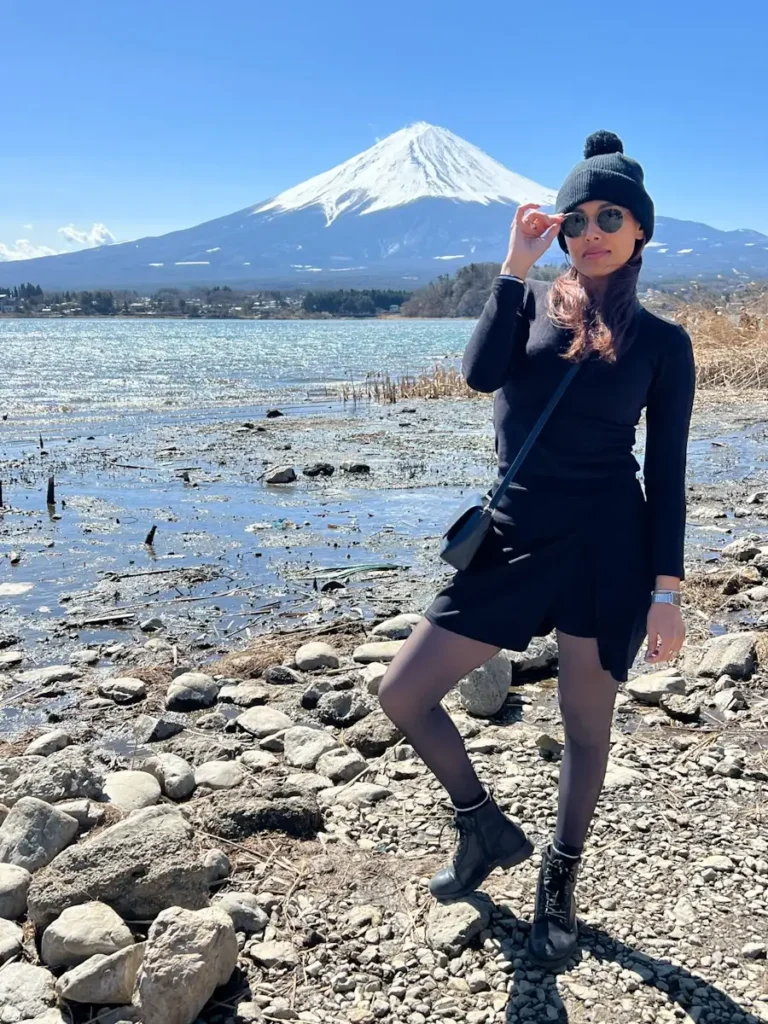
In September, I saw a green Mount Fuji with luckily, clear skies. In March, it was colder, but I got to see the snowy version, which felt more iconic. So timing matters less than visibility. If the skies are clear, you’re lucky.
I booked organised tours both times, and I would recommend doing the same. It’s just so much easier when travelling solo and a great way to meet other travellers.
It takes all the stress out of planning transport, and everything is arranged for you. You’ll usually stop at places like Lake Kawaguchi, Oishi Park, and Oshino Hakkai, which are all set up for good views and photos.
I did recommend these types of tours:
- a Mount Fuji highlights tour (this is the exact tour I booked in March)
- a private Mount Fuji tour your catered to all your preference (everyting at your pace)
- a Lake Kawaguchi tour (more touristy, but still fun, especially with the lake and boat ride)
I’ve written an in-depth guide on the best tours to Mount Fuji. Check it out if you’re looking for more options.
On the way back to Tokyo, you’ll likely arrive near Shinjuku Station. If you still have energy, go for dinner at Gyopao Gyoza Shinjuku. It’s a solid spot after a long day out. After that, I’d call it a night.
Day 4 in Tokyo: Gotokuji, Shimokitazawa and Shibuya
morning: gotokuji and shimokitasawa
Start your day a bit outside of central Tokyo at Gotokuji Temple. It’s quieter, less chaotic, and a nice break from how intense Tokyo can feel. The temple is known for its small cat statues (manekineko), and yes, they’re actually really cute.

Go early if you can. It’s a much better experience without crowds and so easy by subway.
Just before heading back to the station, stop at Rarasand. It’s a small coffee spot near the temple, and they have these cat-shaped cakes that are almost too cute to eat.
From there, head to Shimokitazawa, this is on the route back to Shibuya. It’s known for thrift stores, small boutiques, and more independent shops. I love exploring by foot.
I dropped in a few thrift stores and bought amazing sunglasses and a red flanel jacket.
afternoon: shibuya
For lunch, head to Shibuya and I’d go to Gyukatsu Motomura.
There are multiple locations across Tokyo, so just pick the one that fits best into your route. You get breaded beef that you finish cooking yourself on a small stone grill, with a few side dishes. It’s simple, but really good, especially with a cold beer.
In the afternoon, head to Shibuya.
Walk through Shibuya Crossing at least once. It’s just a crossing, but seeing it in real life is still worth it. It’s chaotic, busy, and exactly what you expect. You’ll get your “I’m in Tokyo” feeling here.

If you want a view over the city, go to Shibuya Sky around sunset. The views are great, but there are a few things to keep in mind.
You need to book your time slot in advance, especially for sunset. And if it’s too windy, they close the outdoor area, which is the main reason to go. That happened to me, so I missed out on the rooftop experience.
evening: shibuya ramen tour
In the evening, you can either figure out dinner yourself or book a ramen tasting tour in Shibuya.
If you love ramen, like me, the tour is an easy option. You’ll try a few different ramen spots, and everything is arranged for you. It also makes it easier to meet people when you’re travelling solo.
Day 5 in Tokyo: Day trip to Kamakura and Shinjuku evening
If I did this itinerary again, I would use this day for a trip to Kamakura.
I didn’t go on my trip because I didn’t have the time, but looking back, this is something I would prioritise over adding another city stop. It’s an easy day trip from Tokyo and gives you a completely different experience.
Kamakura is a coastal town, about an hour from Tokyo by train. It’s known for its temples, the Great Buddha, and a more relaxed atmosphere compared to the city.
You can get there on your own by train, which makes it a simple day trip without needing to book a tour.
What makes this a good addition to your itinerary is the change of pace. After a few days in Tokyo, having a place where you can walk around, visit temples, and be closer to the coast just adds something different to your trip.
Most people visit:
- The Great Buddha
- A few temples and shrines
- Komachi Street for food and small shops
You don’t need a strict plan here. Just pick a few spots and explore.
In the evening, head back to Tokyo. For dinner I would go for sushi, we’re in the country of sushi after all. There are plenty of good conveyor belt sushi places around like Kura Sushi. It’s perfect for solo dinners.
Day 6 in Tokyo: Omotesando, Shinjuku and Golden Gai
Morning: Omotesando (and optional Ginza)
Today, maybe take it a little bit slower. Sleep a little longer after a few long and early days. Then start your day in Omotesando.
This is a completely different side of Tokyo compared to places like Shibuya or Shinjuku. No neon lights, no massive billboards, just a more polished and upscale atmosphere.
It’s still busy, but it feels calmer. You’ll find luxury stores, smaller boutiques, and some really nice cafés. And if you have the time, add Ginza to the itinerary too. They’re only a 20-minute subway ride apart, but I thought they had the same vibe.
Afternoon: Shinjuku and Omoide Yokocho
In the afternoon, head to Shinjuku. I love Shinjuku, it’s the rougher part of the city, but it feels special (and a little crazy).
Make a quick stop at Omoide Yokocho, if you desperately want to see it. I get that it’s interesting and small streets are cute. But during opening hours, it’s crowded and smokey. The smoke from the skewer grills was too much for me. It just feels like a tourist trap. But you decide for yourself.
Evening: Izakaya tour and Golden Gai
Local izakayas can feel a bit intimidating, especially if you’re travelling solo. They’re often small, very local, and not always the easiest to navigate if you don’t speak the language.
So, I recommend doing this izakaya food tour. It takes you to a few different places, usually smaller spots you wouldn’t find yourself, and gives you a great introduction to real Japanese food and the whole izakaya experience.
After that, head to Golden Gai.
I really enjoyed it. The bars are tiny, and it’s one of those places where it’s easy to end up talking to other travellers. It doesn’t feel forced, it just kind of happens. Some bars have a cover charge (I see it as tip), but it’s mainly to keep the bad folks out.
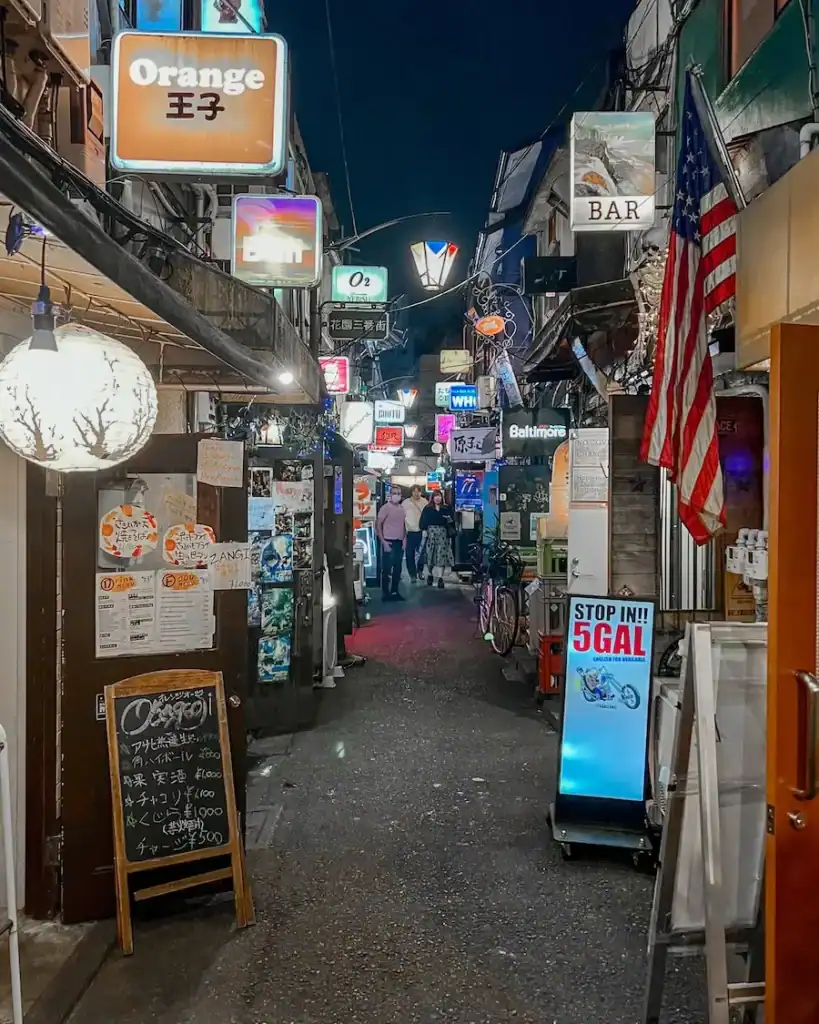
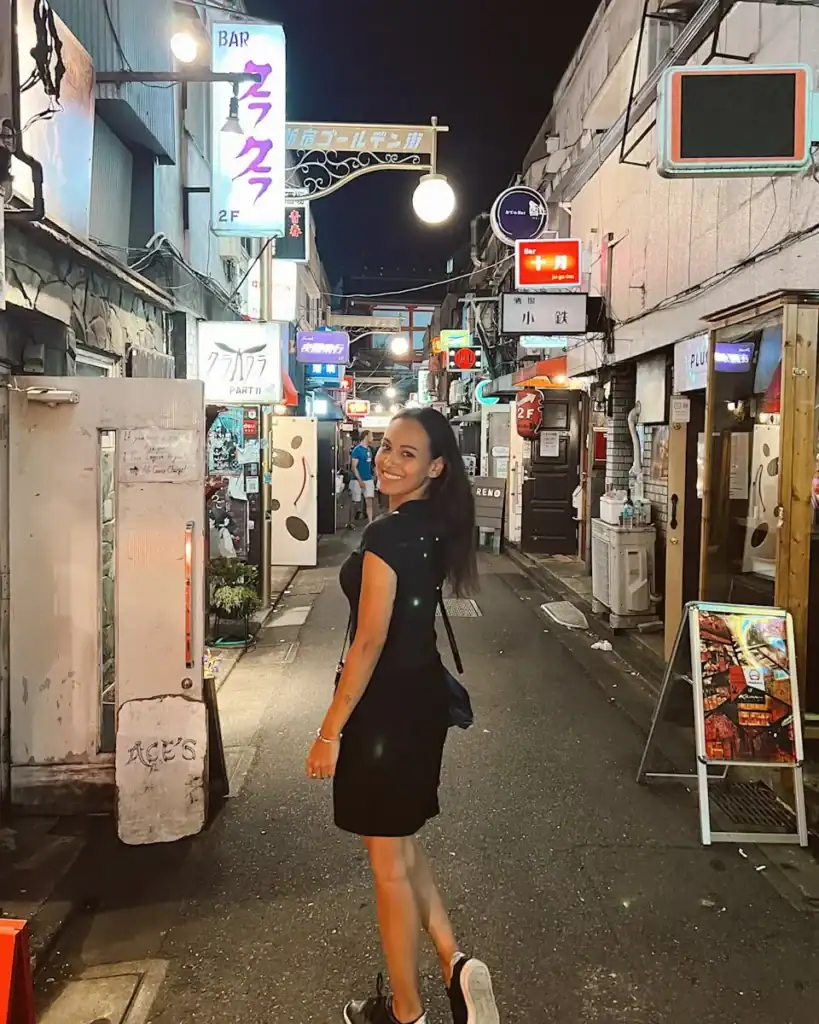
I ended up meeting several other travellers here, even though I chose the bars that had a calm and quiet vibe.
A few drinks at Golden Gai is the perfect way to end your time in Tokyo before moving on to the next part of your trip.
Day 7 in Kyoto: Arrival and Gion
Kyoto was my favourite part of Japan. It feels completely different from Tokyo. No skyscrapers, no neon lights, just traditional houses, temples, shrines, and a lot more green. It feels more authentic, even though it’s still very touristy.
One thing you need to know before arriving: you have to wake up early in Kyoto.
The main sites get extremely crowded during the day, so the earlier you start, the better your experience will be. That’s why staying a few days here makes such a difference.
Afternoon: Arrival and settling in
After arriving from Tokyo, take some time to settle in and explore your area.
Kyoto is much smaller than Tokyo, and it feels more walkable. You don’t need a packed plan for this first day. Find a cute café or how about a brewery?
There are a lot of good food spots here, so this is also a good moment to just try something local without overplanning it.
Evening: Gion
In the late afternoon and evening, head to Gion.
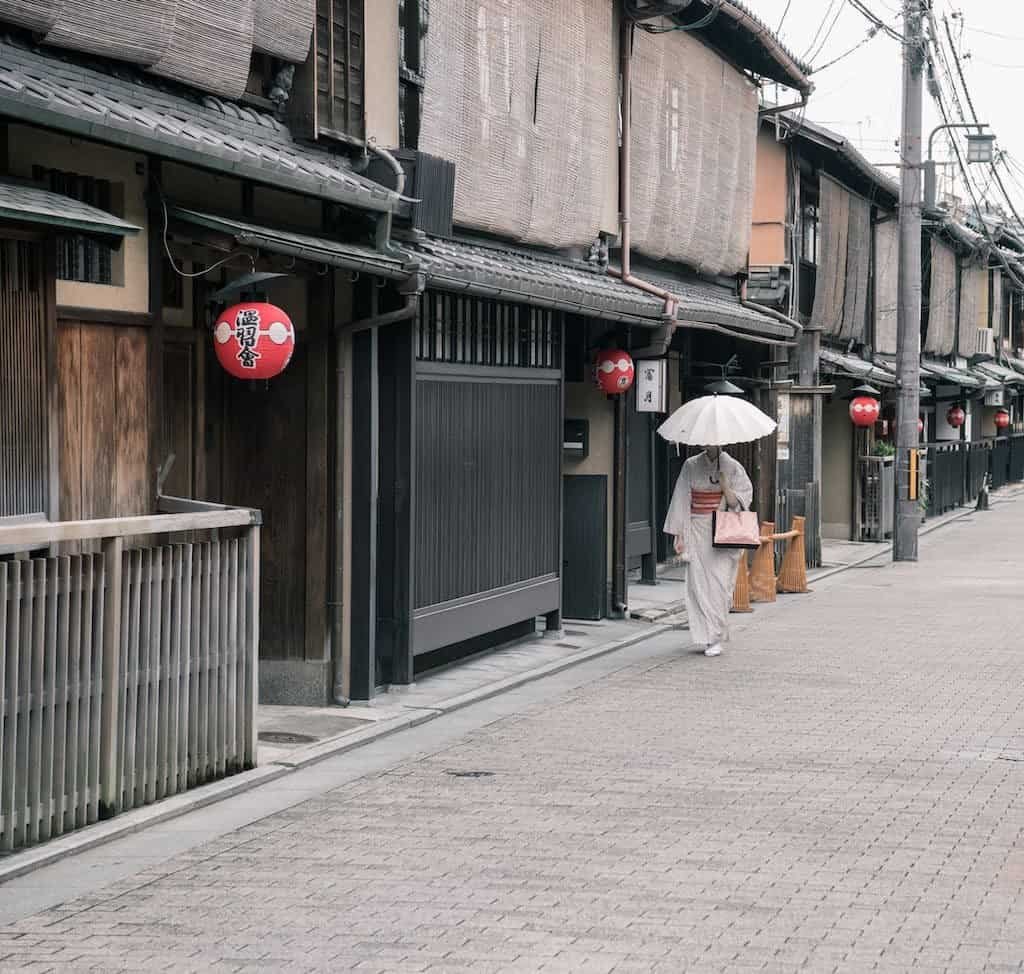
This is the traditional part of Kyoto, with wooden houses, narrow streets, and that classic atmosphere you probably picture when you think of Japan.
It’s also the area where you might spot a geisha, although I didn’t see one myself.
It’s busy, but in the evening it feels a bit more relaxed, and it’s a good introduction to Kyoto before diving into temples and early mornings the next day.
Day 8 in Kyoto: Higashiyama, Nishiki Market and a tea ceremony
Morning: Hokan-ji, Sannenzaka, Ninenzaka and Kiyomizu-dera
Start your day early at Hokan-ji Temple (the pagoda). This area gets packed later in the day, so going early makes a huge difference.
From there, walk up through Sannenzaka and Ninenzaka towards Kiyomizu-dera.
These streets are exactly what you picture when you think of Kyoto. Traditional houses, small shops, and narrow paths. They’re beautiful, but they get very crowded, so this route works best in the morning.
Continue up to Kiyomizu-dera. The area around is free to enter, but to enter the temple you have to pay a small fee.
I’ll be honest, during the day this place is overwhelming. When I went, it felt like being packed in like sardines. If you’re here early, it’s manageable.
Midday: Nishiki Market
Head to Nishiki Market around lunchtime.
It’s a good place to try different foods in one spot. Similar to Tsujiki in Tokyo, you just walk through and pick whatever looks good. I loved the wagyu beef skewers and broiled oysters with a glass of sauvignon blanc.
And for the dessert with coffee, check out BAW 2D Tearoom. I loved their waffles with a good cup of coffee.

Afternoon: Tea ceremony
In the afternoon, do a tea ceremony near Kawaramachi. It’s a nice break from the crowds and gives you a different side of Japanese tea culture. This tea ceremony gives you the option to rent a kimono, how fun is that?
Evening: relax
Keep the evening open. You can head back to Gion, explore more, or just go for dinner depending on how tired you are. This is what I love about travelling solo. You decide what you want to do.
And with 2 weeks in Japan, you don’t need to have a strict itinerary, there’s actually time to relax with a drink. Use it.
Day 9 in Kyoto: Arashiyama and a bike tour
Morning: Arashiyama Bamboo Grove and surroundings
Start your day early in Arashiyama. The bamboo grove is one of the most photographed spots in Kyoto, but it’s not really a forest.
It’s more a few paths lined with bamboo, and it’s smaller than people expect. That said, it still looks good, especially in the morning when the light comes through the trees.

Like everywhere else in Kyoto, it gets crowded, so go early if you want to actually enjoy it. The area around it is cool too. It feels more open, almost like a park, with some temples, walking paths, and space to explore a bit more freely.
I ended up just walking around here, and that part was actually one of the nicer areas in Kyoto. On the way out, grab a coffee at Nakagawa Hatsumeido nearby.
Afternoon: Bike tour and Kinkaku-ji
In the afternoon, do this Kinkakuji bike tour. As a Dutch person, this is one of the best ways to explore a city. You cover more ground than walking, and it just feels easier to move around.
I love riding around on my bike.
This tour takes you through different parts of Kyoto, including Kinkaku-ji (the Golden Pavilion), so you’re combining sightseeing with something more active. Why don’t kill two birds with one stone.
Evening: Free evening in Kyoto
Use your last evening to explore a bit more or go back to an area you liked. Gion and Pontocho are both good options for dinner, especially if you want something a bit more atmospheric.
This is a good moment to try my favoirite food spots like:
- Kyoto Engine Ramen → amazing ramen, also vegan or gluten free
- Gyoza Chao Chao → delicious gyozas, and kind staff
- Katsukura Tonkatsu → the best tonkatsu in Kyoto
- ja!rêve → beautiful and delicous dessert for a sweet tooth
- Kyoto Beer Lab → extensive list of draft beer and food
Day 10 in Kyoto: Fushimi Inari, food tour and Nara
Early morning: Fushimi Inari
Be to Fushimi Inari around 6 a.m. Really. This makes all the difference. You’ll actually be able to walk through the torii gates without crowds, which is the whole point of being here.
If you go later, it gets packed. It turns into a slow-moving line of people, and you lose the experience completely and it’s horrible.
You don’t need to hike all the way to the top. Just go as far as you want and head back down. I loved fushimi inari, because the red tori gates are one of the iconic views of Japan I saw on tv when I was younger that made me want to visit Japan.
Late morning / Afternoon: Optional trip to Nara
After Fushimi Inari, you can take a trip to Nara. It’s about 20 minutes by train from Kyoto, so it’s easy to fit into your itinerary.
I went, and I wouldn’t go out of my way for it again. But, I get the appeal and that’s why I visited Nara anyway. The bowing deer are popular, and a lot of people still enjoy it.
The deer are the main attraction, but they’re constantly surrounded by tourists feeding them and trying to get photos. Some of them get aggressive, and overall it didn’t feel like a great experience.

Evening: Food tour in Gion and Pontocho
When you get back to Kyoto, book this amazing food tour in Gion and Pontocho where you will be tasting 13 dishes.
Food tours or cooking classses are the way to experience local food without having to figure everything out yourself. You’ll visit a few different places, try different dishes, and get a better feel for the local food scene.
As a solo traveller, it’s also a perfect way to meet other travellers and travellers that have the same interest. You get that social aspect without having to plan anything yourself, and it just makes the evening more fun.
Day 11 in Osaka: Arrival and Dotonbori
Osaka feels like stepping back into city life after Kyoto. For me, it didn’t feel as special as Kyoto, and not as impressive as Tokyo. But that’s also because Kyoto sets the bar very high.
Osaka is different. I feel it’s less about temples and culture, and more about food and atmosphere. It’s often called the food capital of Japan, and that’s what stands out here.
Osaka is only about 20 to 30 minutes from Kyoto by train, so you’ll likely arrive around midday.
Afternoon: Arrival, Namba and Rikuro’s cheesecake
Arrive in Osaka, check into your hotel, and head to Namba.
Start with Rikuro’s. It’s known for its viral, fluffy Japanese cheesecake, and yes, there’s always a queue. It moves quickly if you’re just picking one up.
The Namba branch has a tea room upstairs, where you can actually sit down and order the cheesecake with tea or coffee.
What you should do is go inside first and get a ticket from the machine. It gives you a spot in the queue, and you can check your waiting time online. When I went, it was around two hours.


Don’t wait around. Just grab your ticket, leave, and explore Namba while you wait.
When it’s your turn, head back and sit down. You can order a full cheesecake, or go for a set with a slice of cheesecake, another cake, and tea or coffee. That’s exactly what I did.
Evening: Dotonbori, food and Don Quijote
After, head to Dotonbori.
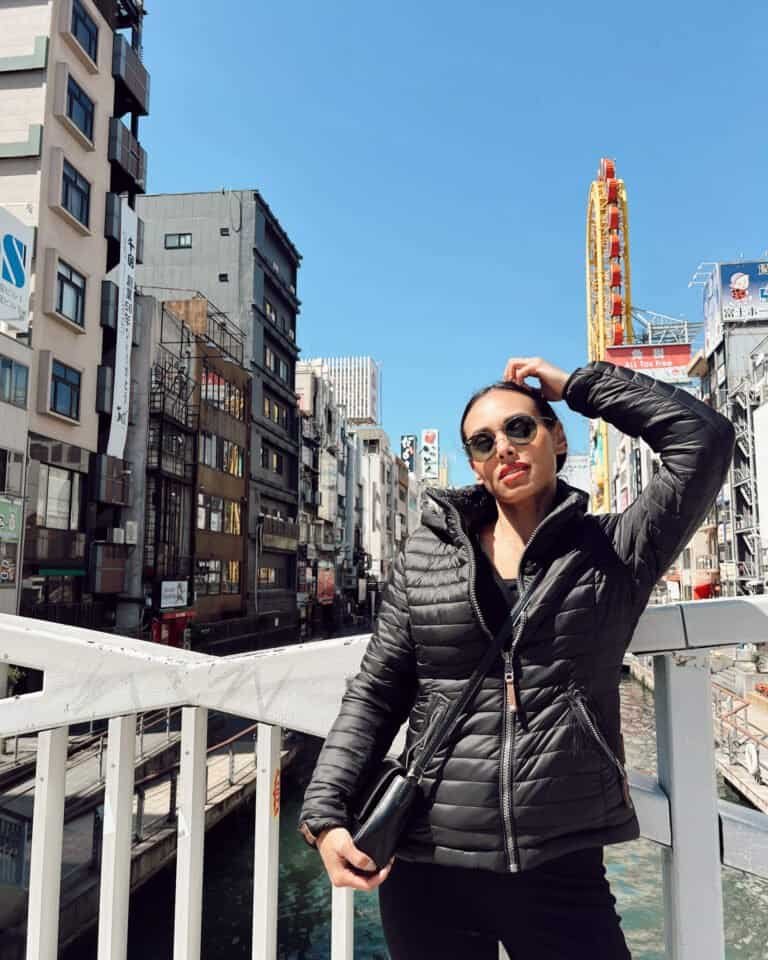
This is the busiest part of Osaka and where everything happens. Street food, neon lights, crowds, it’s chaotic, but that’s the whole point.
Try things like takoyaki (it was not really my thing) or okonomiyaki and just walk around and see what looks good.
You can also do a Dontonburi river cruise here. It’s very touristy, but it’s actually fun to see the area from a different perspective. You just buy your ticket on the spot.
Another stop here is Don Quijote. You can’t visit Japan without going to Don Quijote. I would almost say it became part of Japanse culture.
I think this store is loud, chaotic, and completely overwhelming, but, honestly, it’s also the best place to buy souvenirs. Snacks, skincare, random gifts, you’ll find everything here. The Dotonbori branch is massive.
A little insider tip, look for these macademia nuts covered in chocolates, they are divine! There’s also a Ferris wheel attached to this branch, which you can ride if you want a nice view over dotonburi.
Day 12 in Osaka: Day trip to Uji and Wagyu dinner
Morning and afternoon: Uji and matcha experience
Book this bike ride day trip to Uji, the green tea heaven.
It’s about an hour from Osaka and known as the birthplace of Japanese matcha. If you’re really into matcha, this is probably something you’ll love.
Personally, I’m not a huge matcha person. I’m more of a chai latte girl. But even then, I still think Uji is an interesting place to visit, especially because Japan is so focused around matcha culture.
I did this organised bike tour in Uji, and that’s what made the experience. Cycling through the matcha fields is not something you’d easily plan yourself, and it turns a simple day trip into something more memorable.
This takes up most of the day, so expect to be back in Osaka in the late afternoon.
Evening: Wagyu dinner
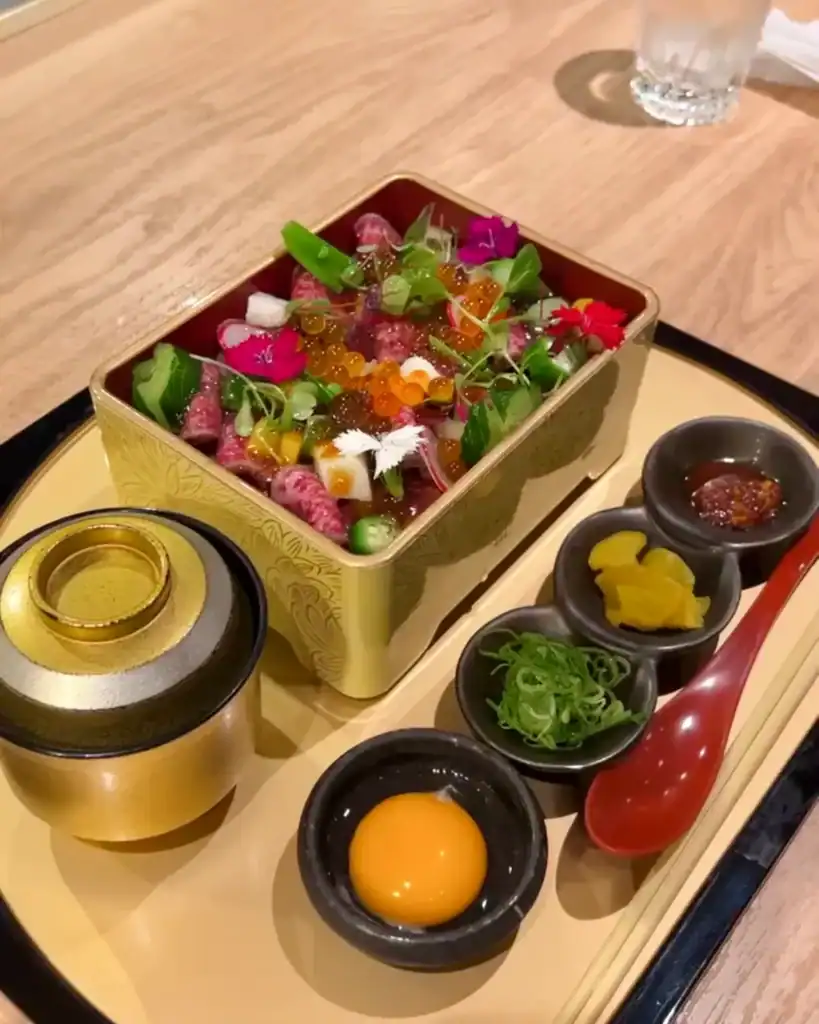
For dinner, check out this Wagyu restaurant. I went to Idaten, and it was one of the best meals I had in Japan.
There’s usually a queue before opening, but it’s ok. It was all pretty well arranged. You can see the level of detail and care that goes into the preparation, and the quality speaks for itself.

Day 13 in Osaka: Osaka Castle, Namba and final night
Morning: Osaka Castle
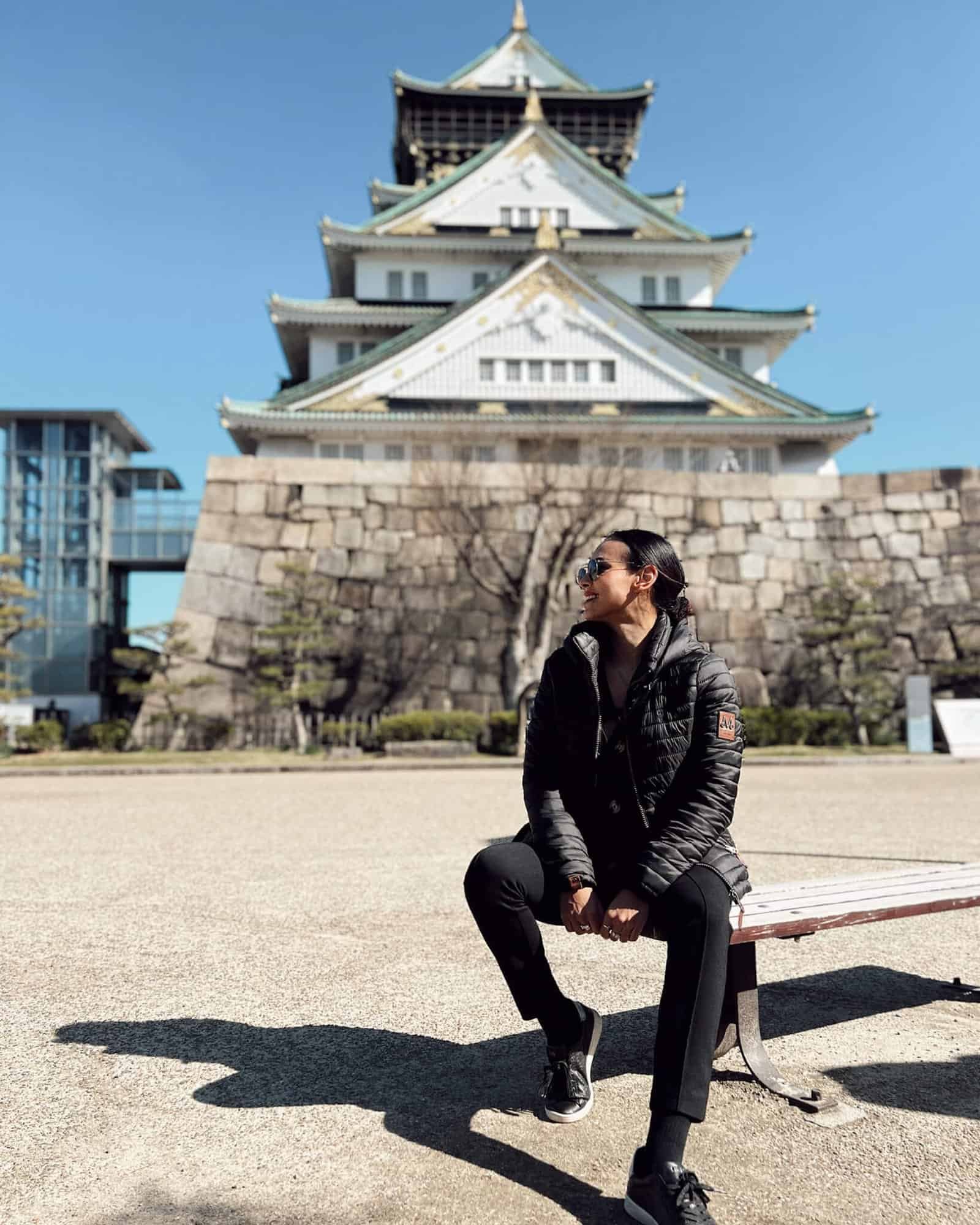
Start the morning at Osaka Castle. It gets busy, but the grounds are big enough that it doesn’t feel overwhelming.
I didn’t go inside, and I don’t think you need to. Walking around the outside already gives you everything you’re here for. There are plenty of spots where you can get good views of the castle without dealing with crowds inside.
You can see that from the fantastic pictures I took.

Afternoon: Namba and Namba Yasaka Shrine
Head back to Namba after that. I’d stop by Namba Yasaka Shrine. I missed it, and I’ll be honest, I regret it a bit. The giant lion head stage looks very different from anything else you’ll see in Japan.
After that, just walk around Namba and Shinsaibashi again. This is the time to go back to places you liked or do any last shopping.
Evening: Your last night in Osaka
For your last evening, you have options.
You can book a food tour in Shinsekai. It’s a more local, slightly rougher area, and this tours is highly rated. It’s a good way to try different food spots without having to figure it out yourself.
Or just do your own thing. Walk around, find a place that looks good, have a drink somewhere, and end the trip your way. This is your last day in Japan, end it with a bang.
You can also check out the Cocktail Machine, it’s a speakeasy, hidden in a building on one of the top floors, behind a vending machine. The cocktails are fun (way too many options), they also have loads of craft beers and it’s a quirky, fun place to have a drink.
Day 14: Departure from Osaka
Ready to day goodbye to Japan?
Depending on your flight time, you might have a bit of time left in the morning for a coffee or a quick walk around your neighbourhood. Nothing major, just a slow start before heading to the airport.
Getting to the airport from Osaka is straightforward. But, you do have to pay attention. to the signs. And all those signs can get overwhelming, even after 2 weeks.
If you’re flying from Kansai International Airport (KIX), the easiest option is the train:
- The Nankai Airport Express from Namba takes around 45 minutes
- Or the JR Haruka Express from Shin-Osaka or Tennoji, which is slightly faster and more comfortable
Both are easy to use, well signposted, and run frequently.
I’d give yourself enough time, especially if you’re travelling during busy hours, but overall, getting to the airport in Japan is very smooth compared to most places.
Where to stay in Tokyo, Kyoto and Osaka
Where to stay in Tokyo
Tokyo is huge, so where you stay matters more than you think. I’d recommend staying somewhere central and well-connected like Shinjuku or Shibuya, especially for your first trip.
I also stayed close to major train stations (walking distance close), and it made everything easier, especially after long days out or coming back late.
These are the hotels I’d book:
- Hotel Monterey Ginza → upscale area, boutique style hotel
- Tokyu Stay Shibuya → perfect location
- Stay SAKURA Tokyo → simple, clean, good value
Don’t get confused, rooms can be small in Japan. That’s totally normal. As a woman travelling alone, I always prioritise location over space. Especially if you’re on a budget.
Where to stay in Kyoto
Kyoto is much smaller, so you don’t need to overthink this as much. Staying near Gion or Kawaramachi works well because you’re close to restaurants and a lot of the main sights.
I’d focus on staying somewhere with easy access to transport, especially if you’re planning early mornings.
A few places I would choose:
- Goco Stay Kyoto Shijo → great location, good value, good for solo travel
- Seikoro Ryokan → traditional stay if you want that experience
- Hotel The Celestine Kyoto Gion → beautiful, great location, unique
Looking for more unique recommendations? I also wrote an in-depth post on the best boutique hotels in Kyoto.
Where to stay in Osaka
Osaka is all about location. Stay near Namba or Dotonbori so you’re close to food, nightlife, and transport.
This is where I’d keep things simple and central, especially since you’ll likely be out in the evenings.
A few amazing options I would choose:
- Hotel Cordia Osaka → modern, good location, spacious rooms
- OMO7 Osaka by Hoshino Resorts → a little more luxury, big rooms
- APA Hotel Yodoyabashi → budget-friendly, small rooms
Is 2 weeks enough for Japan?
Yes, two weeks in Japan is the perfect amount of time for a first trip.
You can see the main highlights, explore different cities, and still have time to enjoy it without feeling like you’re constantly rushing from place to place.
This itinerary follows the classic Golden Route through Tokyo, Kyoto and Osaka, which works really well if it’s your first time in Japan. You get a mix of modern city life, traditional culture, temples, food, and a few day trips along the way.
There were busy days, but also moments where I could slow down, have a quiet coffee, or just call it an early night after a long day. That balance made a big difference, especially travelling solo.
If you don’t have the full two weeks, I’ve also created a shorter version of this route. You can check out my 10-day Japan itinerary which still covers the main highlights but with a tighter schedule.
Is Japan good for solo travel?
Japan is an excellent destination for solo travel. It is very much catered to people doing all sorts of things alone, which makes it perfect for solo travellers, but it also might feel a little lonely for extroverts.
It’s common for restaurants and bars to have counter seats or one-seaters for solo people, making it perfect for solo travellers! Eating out alone is very common! There are even yakiniku places, especially for solo people.
Is Japan safe for female solo travellers?
Yes, Japan is one of the safest countries I’ve travelled to as a solo female traveller.
I felt safe the entire time, whether I was walking around during the day, using public transport, or heading back to my hotel in the evening. It’s a country where people mind their own bussiness but people are respectful, and kind.
That said, you still need to use basic common sense and don’t do anything you wouldn’t do at home.
One moment that really stood out to me was at a train station when I was trying to figure out which line to take. I was standing there looking at the maps, clearly a bit lost, and someone came up to me and asked if I needed help. He didn’t speak much English, but he still took the time to show me exactly where to go and which train to take.
That kind of thing happened more than once.
What also stood out to me most is how normal it feels to be alone here. Eating solo isn’t awkward, restaurants are set up for it, and no one is paying attention to what you’re doing.
You’ll probably come across a lot of advice online telling women to hide the fact that they’re travelling alone or to pretend they have a boyfriend. I don’t agree with that. Japan is not a place where you need to shrink yourself or travel in fear.
If you want to feel even more prepared before your trip, I’ve put together a full guide with my solo female travel tips, where I cover everything from safety to confidence and how to actually enjoy travelling alone.
Best time to visit Japan for this itinerary
The best time to follow this itinerary is during spring (April to June) or autumn (September to November). You’ll get mild weather, clear skies, and maybe cherry blossoms or fall foliage, depending on the region.
I’ve travelled in both September (still warm) and March (surprisingly cold), and while the weather was different, both were great experiences as long as you get lucky with clear skies.
If you want a full breakdown of seasons, crowds, and what to expect each month, read my detailed guide on the best time to visit Japan.
How much does a 2-week trip to Japan cost?
Japan has a reputation for being expensive, but it really depends on how you travel. For a 2-week solo itinerary to Japan, a realistic budget is around $2500 excluding flights.
Your biggest expenses will be accommodation and transport between cities.
For accommodation, expect to pay around $150 per night for a simple, clean hotel room with a private bathroom. Rooms in Japan are small, but that’s completely normal. If you want more space or something a bit more comfortable, prices are closer to $200–$250 per night.
Transport between cities, especially the Shinkansen, also adds up quickly ($100 from Tokyo to Kyoto one-way), so factor that into your budget.
Food doesn’t have to be expensive at all. You can eat really well in Japan without spending a lot. I loved my ramen, sushi, gyoza, and small local places where you get high-quality food for great prices.
Of course, if you choose more upscale restaurants or book multiple tours, your budget will increase, but it’s easy to balance. I mean, you can totally find a $200 omakase dinner if you want.
How to get around in japan
Travelling between Tokyo, Kyoto and Osaka is very straightforward thanks to Japan’s bullet trains (Shinkansen). From Tokyo to Kyoto, the train takes around 2 to 2.5 hours. Kyoto to Osaka is much shorter, about 30 minutes.
Trains are frequent, comfortable, and easy to use, even if it’s your first time in Japan. You can book tickets in advance or at the station.
For getting around within cities, you’ll mostly use trains and subways. The system can look overwhelming at first, but it’s actually very easy once you get used to it. I recommend getting a (digital) Suica card, which you can use on almost all public transport.
If you want a full breakdown read my guide on how to use public transport in Japan.
fAQ 2-week solo itinerary to japan
Do I need the Japan Rail Pass for 2 weeks in Japan?
No. For this itinerary, you’re not travelling enough by train. Buying individual tickets is cheaper.
Is it easy to eat alone in Japan?
Yes, Japan is one of the easiest countries to dine solo. Many places are set up for it with counter seating and tables for one are normal.
Do I need cash in Japan or can I use card?
You can use card in most places, but it’s still smart to carry some cash, especially for smaller restaurants, markets, or local shops.
Plan your trip
With my online resources
Use my travel planning roadmap with all my digital resources to book every detail of your trip!
Ready for your 2-week solo itinerary in Japan?
This 2 week solo itinerary to Japan gives you a clear, realistic route through Tokyo, Kyoto and Osaka without feeling rushed. It’s a strong first-time itinerary that balances highlights, food, and enough flexibility to make the trip your own.
If you want to plan the rest of your trip in more detail, check out all my Japan travel guides where I cover everything from destinations to solo travel tips.
Ready to dive into more about Japan?
- The Perfect 3 Days In Tokyo: See, Eat And Explore + Map
- Discover The Best Tours To Mount Fuji In Japan For An Epic View
- The Ultimate Solo Female Travel Guide To Kyoto
Remember to check out this guide on Japanese etiquette from the Japanese Tourism Board. Familiarising yourself with local customs and manners is a must when visiting a new country.